Bach Double, second violin: practising your part with the orchestra
The second solo of Bach's Concerto for Two Violins in D minor, BWV 1043, is the part many violinists learn first: in the Suzuki books it comes in Book 4, a book before the first violin part. In the Vivace the two solos enter with the same theme, one after the other, and from then on you have to hold your line while another violin plays against it. That is where practising with the other parts helps most.
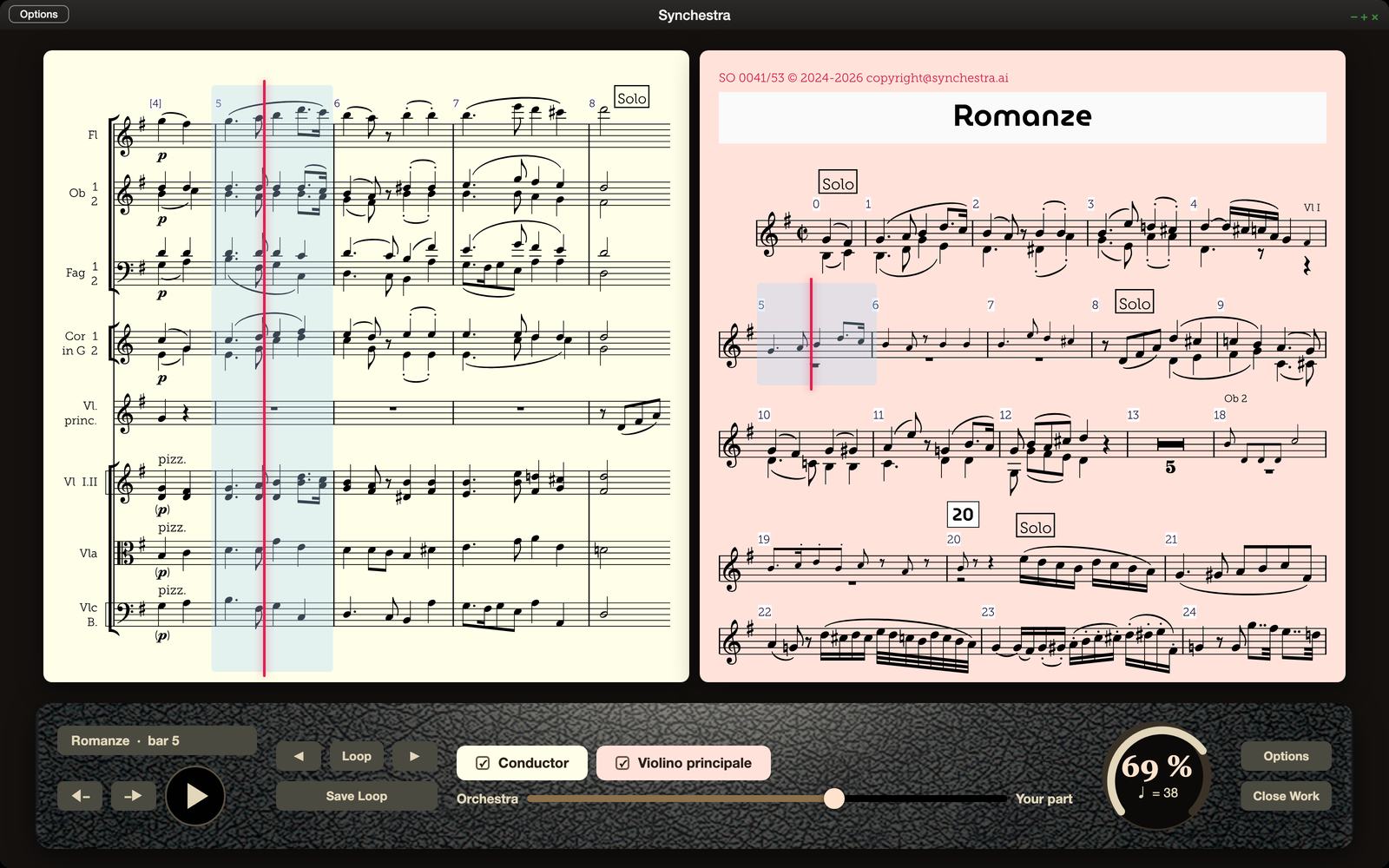
What makes the second violin hard
The two solos are equal partners. They imitate each other, cross, and trade the melody back and forth, so the second violin is rarely just an accompaniment. On your own, the part can sound like a string of entries with gaps between them. Played against the first violin and the strings, every entry has a reason, and you learn to hear where you fit.
The three movements ask for different things. The Vivace (4/4, D minor) needs steady time and clean entries. The Largo ma non tanto (12/8, F major) needs long, singing lines over the strings. The Allegro (3/4, D minor) is fast and full of crossings between the two solos.
A practice plan with the orchestra
- Hear the whole texture first. Play the movement through with every part sounding and follow your line in the part on screen.
- Mute the second violin. That is you. The app plays the first solo, the strings and the continuo.
- Slow it down. Set a tempo you can play cleanly. The pitch stays where it is, so your intonation work still counts.
- Loop the passage that keeps breaking. A loop can have its own tempo, so you can take the hard bars slower than the rest.
- Bring the tempo up in steps until you reach the speed your teacher or your duo partner wants.
Swap parts when you are ready
Every part comes with the work, so you can turn the first violin solo off instead and learn it the same way. Learning the other solo is a good way to understand your own. You can also mute any orchestral part, change the volume of each section, and read the conductor score while you play.
Practising with a duo partner
If you rehearse the concerto with another violinist, both of you can practise at home with the same orchestra, at the same tempo map. When you meet, you have both played your part against the other one many times, and the rehearsal can go to phrasing instead of counting.
Questions
Can I play the second violin part with Synchestra?
Yes. Mute the second violin and the app plays the first solo with the strings and continuo. You can swap and take the first solo whenever you like.
Does the orchestra wait for me if I slow down?
You set the tempo yourself, overall or per section, and you can loop any passage at its own tempo. Tempo following is in development.
Can I buy just one movement?
Yes. The work page sells the complete concerto and each movement on its own.