The Largo of the Bach Double: practising the slow movement with the orchestra
The second movement of Bach's Concerto for Two Violins, the Largo ma non tanto, is in F major and in 12/8. The two solos sing long, overlapping lines over a quiet accompaniment from the strings. It is slow, so it looks easy on the page. In practice it is where tone, bow speed and listening are tested most.
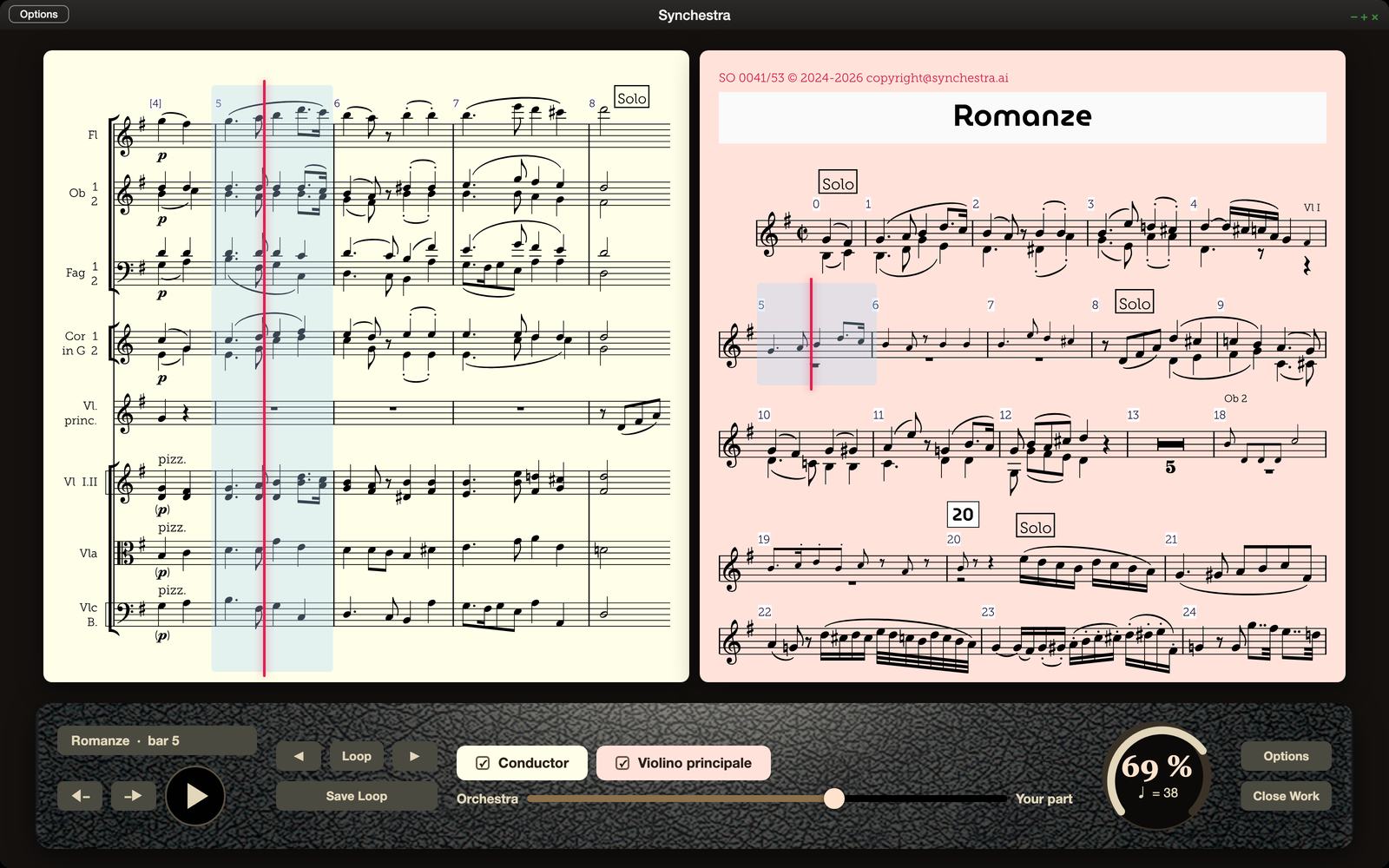
What the Largo asks of you
The two solos take up the same melody in turn, and their lines stay close for the whole movement. You have to keep a long phrase alive while the other violin moves against it, and you have to leave room for it when it leads. On your own you hear only one of the two lines. With the second solo and the strings sounding, you can hear where your phrase should rise and where it should give way.
Practising the long lines
- Listen through once with every part playing and read the conductor score.
- Mute your solo and play it with the other violin and the strings.
- Find the right tempo. "Ma non tanto" means not too slow. Try a few tempos and keep the one where the line still moves.
- Loop a single phrase and work on bow distribution until it carries to the end.
- Turn the strings down to hear the two solos more clearly, then bring them back.
Buying only the Largo
Each movement of the Bach Double is sold on its own, so you can start with the Largo if that is the movement you are preparing. If you want the whole concerto later, the complete work has all three movements with every part and the conductor score.
Questions
Which solo should I take in the Largo?
Either. Mute the first or the second violin and the app plays the other solo with the strings. Swapping is a good way to learn how the two lines fit.
Can I change the tempo during the movement?
You can edit the tempo map overall or per section, and a second person can set the tempo live by tapping a touch screen or with a MIDI controller.
Is there a piano accompaniment for the Largo?
Synchestra plays the orchestra's own parts, so you hear everything a piano reduction leaves out. You can turn any instrument down, or mute it.