Bach's Concerto for Four Harpsichords: rehearsing when the other three aren't there
Bach's Concerto for Four Harpsichords in A minor, BWV 1065, is his arrangement of Vivaldi's concerto for four violins from L'estro armonico, Op. 3 No. 10. It needs four harpsichords, strings and continuo in one room, and four harpsichords in one room are rare. Synchestra lets you take any of the four parts and hear the other three and the strings around you before that day.
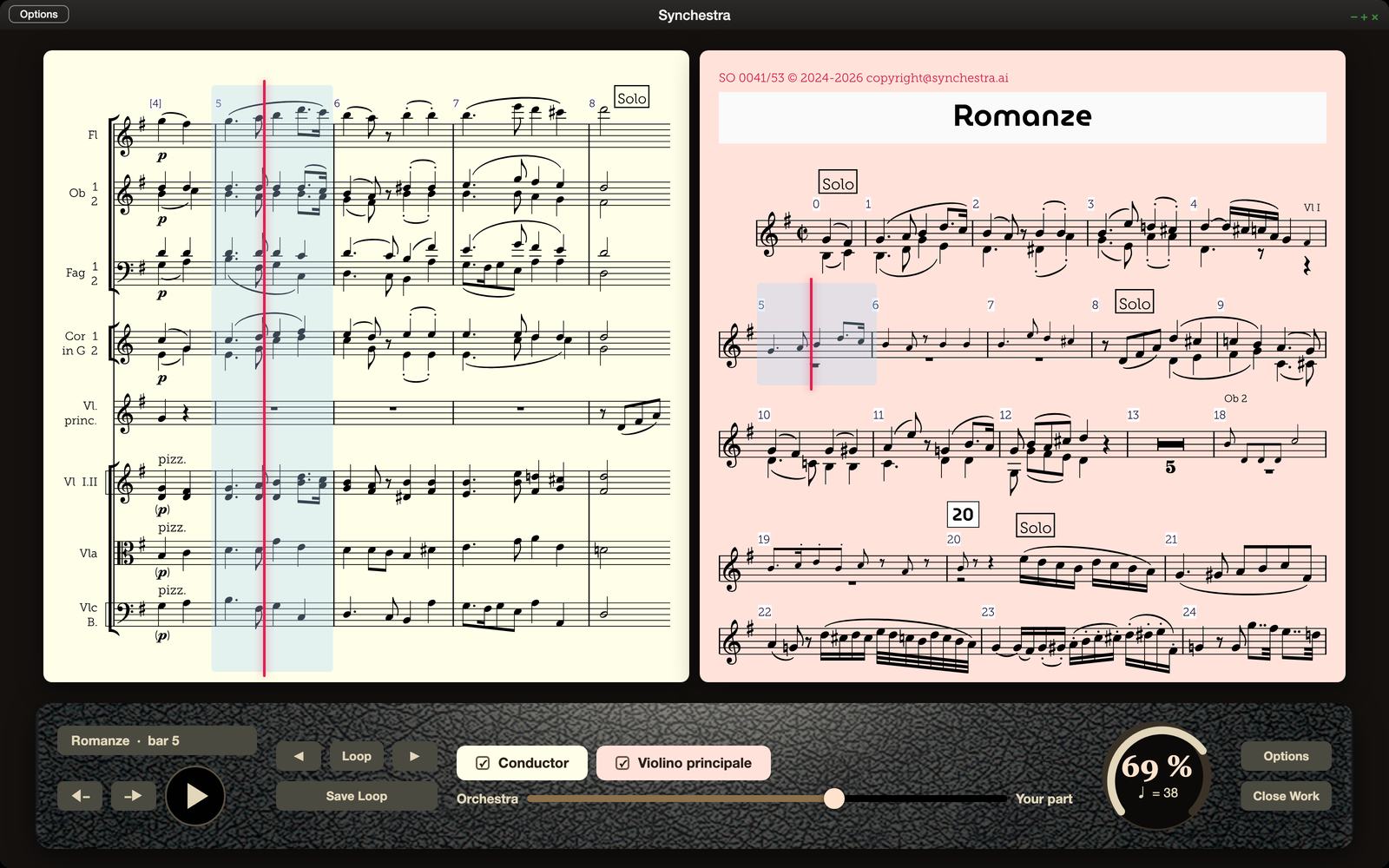
Why this concerto is hard to rehearse
The four keyboard parts are written in dialogue. Bach added notes to Vivaldi's outer movements and passes figures from one harpsichord to the next, so your part only makes sense when you hear the others. In the Largo the four instruments play broken chords with different articulation, and the effect depends on all four being there. Practising the part alone gives you the notes but not the music.
A practice plan
- Choose your harpsichord. Mute Harpsichord I, II, III or IV. The app plays the other three and the strings.
- Practise hands separately. The app can play one hand of your part while you take the other.
- Slow the Allegros down. The pitch stays the same, and short notes stay short.
- Loop the hand-offs where a figure passes from one keyboard to another, until your entry lands in time.
- Tune to the ensemble. Set A to 415 Hz for a baroque pitch, or to 440 or 442.
Learning the other parts
Every part and the conductor score come with the work. If you direct the group from one of the keyboards, you can listen to each harpsichord on its own, read the score, and decide on tempos before the first rehearsal.
Questions
Which part can I play?
Any of the four harpsichord parts, or any string part. The app plays the rest.
Can I practise one hand at a time?
Yes. Keyboard parts can be practised hands separately.
Can I hear the other three without the strings?
Yes. Mute, unmute or set the volume of any instrument or section.